
Compassionate communication is one of the most direct ways to change the quality of every relationship in your life. When you learn to speak and listen from a place of genuine care, conversations shift from defensive to open, from guarded to real. I have watched this happen repeatedly, and I have also experienced how quickly things break down when that care goes missing.
Compassionate communication means speaking and listening with full presence, empathy, and honesty. It applies in every relationship, whether at home, at work, or with strangers, and anyone can begin practicing it right now, in the very next conversation they have.
What Compassionate Communication Actually Looks Like
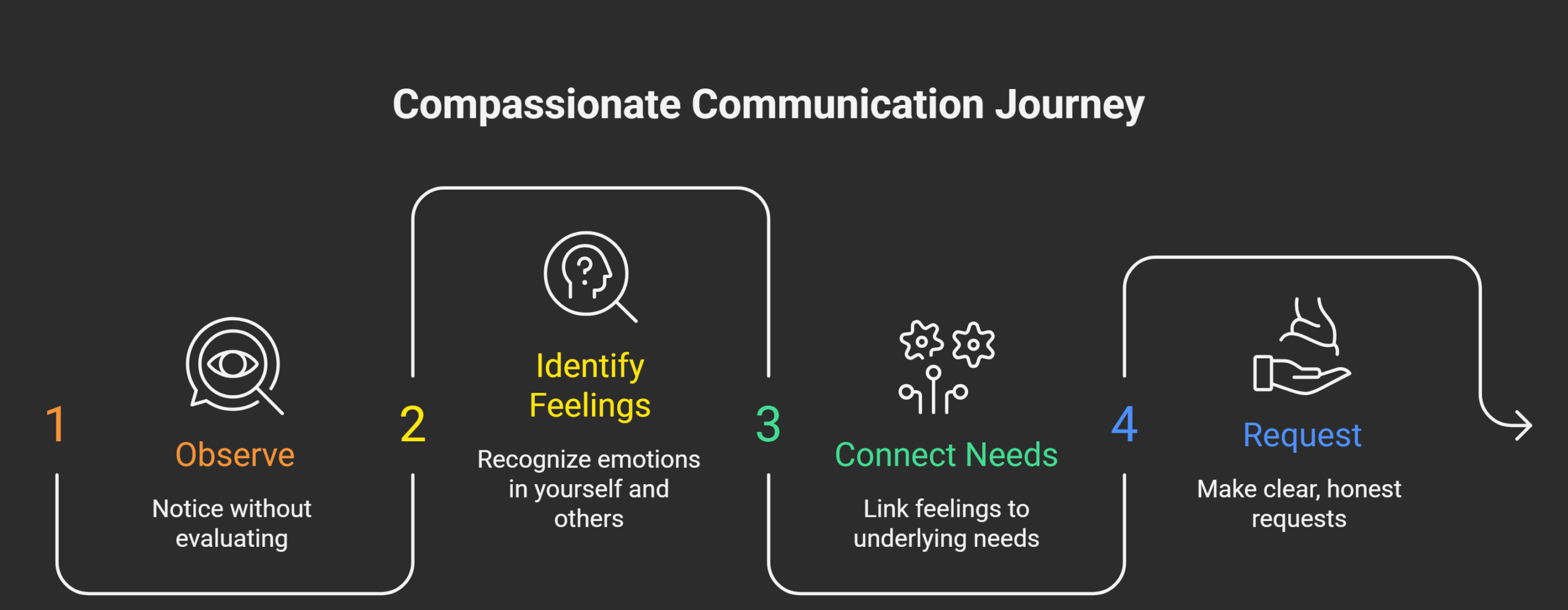
Most people think of compassionate communication as being kind or polite. However, it goes much further than that. At its core, it means recognizing the other person’s inner experience and responding to it, not just to their words. According to The Players Foundation’s guide on compassionate communication, the practice involves active listening, acknowledging emotions, and being thoughtful about timing before you respond.
In practical terms, this looks like pausing before you reply. It looks like asking clarifying questions instead of assuming you already know what someone means. It also means choosing words that open doors rather than close them. These are small habits, but together they completely change the texture of how you relate to other people.
When I started practicing this, the biggest surprise was how much effort genuine listening actually takes. Sitting still, staying focused, resisting the urge to plan my next sentence while someone is mid-thought: these things are harder than they sound. However, that effort is precisely what the other person feels. They feel received.
The Four Steps That Form the Foundation
How to Build the Daily Practice
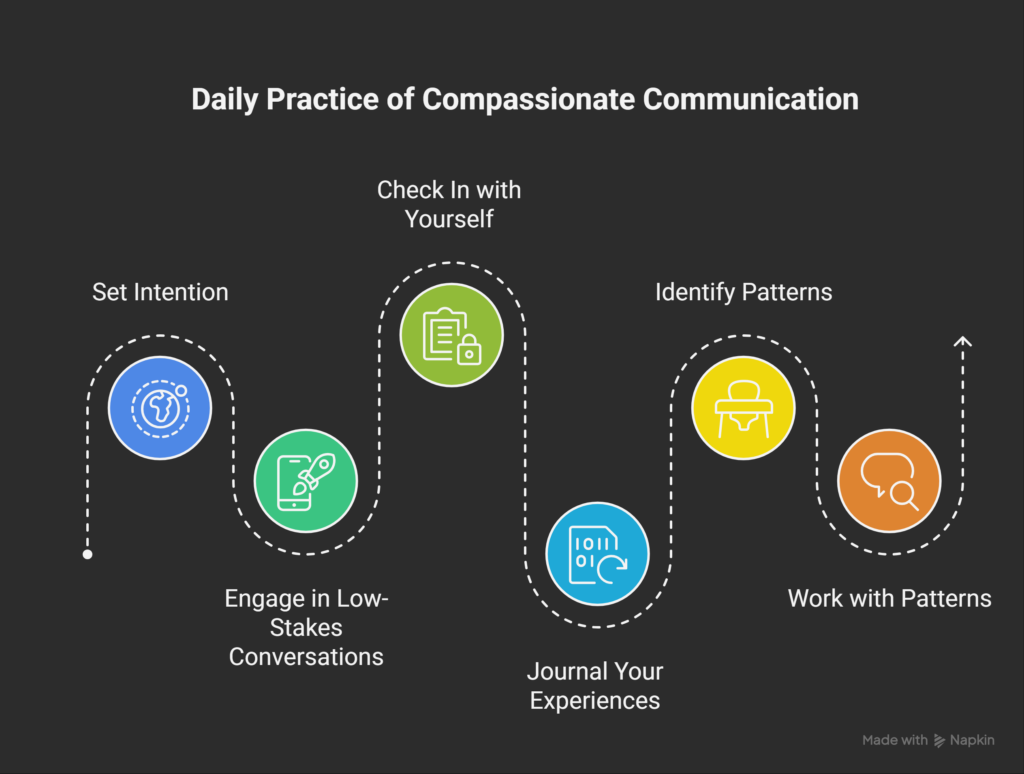
Compassionate communication is not something you master in a seminar and then simply apply. It is a daily practice, much like mindfulness or physical exercise. The muscle gets stronger through consistent use and honest self-reflection when you get it wrong.
Start with low-stakes conversations. Practice with a barista, a neighbour, a colleague you see regularly. Before you engage, set a quiet internal intention: I am going to listen fully and respond honestly. After the conversation, check in with yourself. Did you truly hear them? Did you respond from clarity or from reaction?
Journaling helps here. Not because you need to analyse every exchange, but because writing surfaces patterns you would otherwise miss. You begin to notice the situations, people, or emotional states that pull you out of compassionate presence. Once you can see the pattern, you can work with it.
For a deeper understanding of the foundation behind this practice, my post on what compassionate communication is gives useful context to anchor your daily practice.
The Role of Empathy in Compassionate Communication
Empathy is the engine beneath every compassionate exchange. Without it, the techniques become hollow scripts. With it, even imperfect words land with warmth. Building empathy means training yourself to be genuinely curious about another person’s experience rather than reflexively comparing it to your own.
One practice that has helped me enormously is what I call the pause and wonder. Before I respond to something that triggered me, I ask myself: I wonder what is going on for them right now. That single question interrupts the reactive loop and replaces it with curiosity. Jonathan Haidt’s work in The Righteous Mind explores how deeply our moral intuitions shape the way we hear other people. Understanding that dynamic is genuinely useful when you are working to communicate more compassionately across difference.
Empathy also means tolerating discomfort. Sometimes the most compassionate thing you can do is sit with someone’s pain without trying to fix it. That kind of presence, quiet and full, is one of the most powerful gifts one person can offer another. You can also explore this idea further in my post on how healing creates unspoken understanding.
Common Blocks That Get in the Way
Several things consistently pull people away from compassionate communication, and most of them are internal. The first is the need to be right. When winning the argument becomes more important than understanding the person, compassion exits the conversation immediately.
The second block is unprocessed emotion. When you are flooded with anger, fear, or hurt, accessing empathy is genuinely hard. This is not a character flaw; it is biology. The practice then becomes one of self-regulation: learning to feel the emotion without being controlled by it before you respond.
The third block is distraction, particularly the kind that comes from being mentally elsewhere during a conversation. Half-listening while thinking about your schedule or your phone is the opposite of compassionate presence. The good news is that all three of these blocks respond well to practice and to honest self-awareness.
Frequently Asked Questions (FAQs)
What is compassionate communication?
Compassionate communication is a way of speaking and listening that centres the emotional reality of the people involved. It combines honesty with empathy, ensuring that what you say is both truthful and considerate of how it lands. Rather than focusing purely on information exchange, it treats every conversation as an opportunity for genuine human connection.
How to communicate with compassion
Communicating with compassion begins with slowing down enough to actually hear what someone is saying before you form a response. According to the Global Compassion Coalition, the core of compassionate communication rests on presence, non-judgment, and the willingness to be changed by what you hear. In practice, this means asking open questions, reflecting back what you understand, and being honest about your own feelings without blame.
Can compassionate communication be learned?
Absolutely. Compassionate communication is a skill, not a personality trait, which means anyone can develop it with consistent practice. Like any skill, it improves through repetition, honest self-reflection, and a genuine willingness to grow. The starting point is simply deciding that the quality of your connections matters enough to invest in.
Where do I start if I have never practiced this before?
Start with one conversation today. Before it begins, set the intention to listen more than you speak and to respond from curiosity rather than reaction. You do not need a course or a framework to begin. The practice starts the moment you decide to show up differently, and each conversation after that is an opportunity to refine it further.
A Closing Thought
The shift toward compassionate communication has been one of the most quietly transformative things in my life. It has changed how I argue, how I apologise, how I listen when someone is in pain, and how I receive criticism. None of it arrived fully formed. It came through small, repeated choices to slow down and show up with more care.
What I know now is that most people are not difficult to understand. They are simply people who have never felt fully heard. When you offer them that, something in the whole dynamic changes. Give it a try in your next conversation. You might be surprised how far a little genuine attention goes.
Make it a great day.
Ready to Go Deeper?
Get More From Me
Subscribe on YouTube at @tcgraham for weekly video content.
Join the community in the Ripple Makers Facebook Group.