
Intentional living is one of those phrases I had heard many times before I understood what it actually meant in practice. I thought I was living intentionally because I was busy, because I had goals, because I worked hard and stayed productive. What I discovered was something different. There was a specific moment when I noticed that I had not chosen most of what was filling my days. I had inherited it. From expectations, habits, and the sheer momentum of a life that had been running on autopilot for longer than I realised.
That moment was not dramatic. It was a Tuesday morning. I was in the middle of a full schedule and I could not answer a simple question: is this how I actually want to spend my time? The honest answer was that I did not know. That gap between how I was living and how I wanted to live was the beginning of everything that changed. The shift from reactive to intentional is not a personality overhaul. It is a practice. And it is available to anyone willing to start noticing the gap.
Intentional living means making deliberate choices about how you spend your time, energy, and attention rather than moving through life on autopilot. It is not about perfection or a rigid schedule. It is the practice of pausing before acting, deciding what matters, and aligning your daily decisions with your values rather than your h
abits.
What Does Intentional Living Actually Mean?
Intentional living is not a productivity system. It is not minimalism, though it sometimes looks like it. It is not a self-help trend or a personality type reserved for people with slower schedules and fewer obligations. It is something far more practical and far more available than any of those things suggest.
At its core, intentional living means choosing how you engage with your life rather than simply responding to whatever arrives. It means your decisions reflect what genuinely matters to you rather than what is most convenient, most expected, or most urgent. The key word is deliberate. Not perfect. Not optimised. Deliberate. According to this breakdown of what intentional living actually means in practice, the foundation is not a set of rules but a shift in how you relate to your own choices. That shift is available in any life, at any stage, in any level of busyness.
The most common misconception is that intentional living requires radical change. In reality, it begins with noticing. Before you can change how you live, you need to see how you are currently living. That noticing is the first act of intentionality, and it costs nothing except honesty.
Why Do Most People Live Unintentionally?
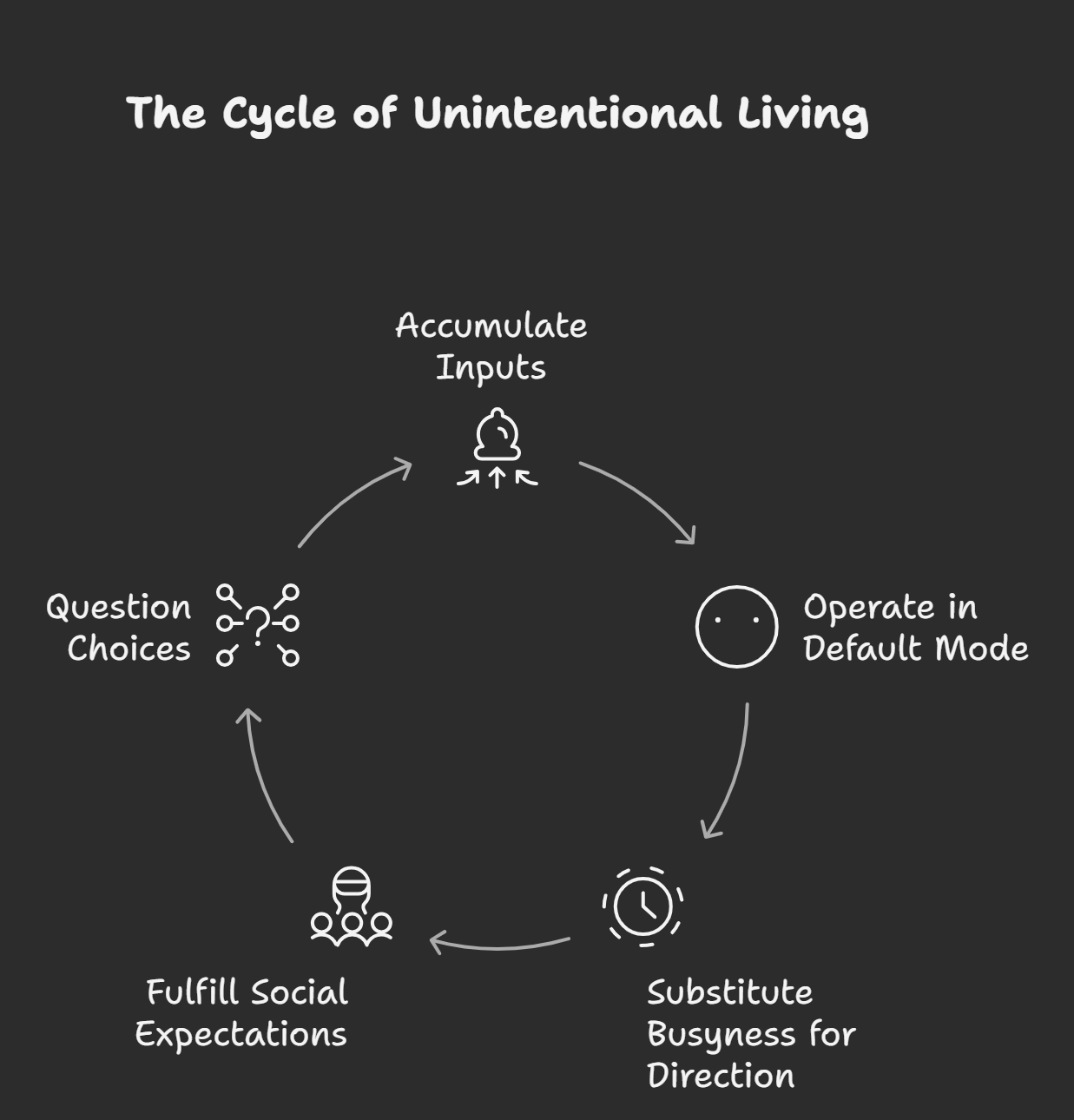
Default mode is powerful. It is the state most people operate in most of the time, and it is not laziness or lack of ambition. It is the natural result of a life that has accumulated more inputs than any person can consciously process. Notifications, obligations, social expectations, other people’s urgencies — all of it creates a current. And most people move with the current rather than choosing their own direction.
Busyness becomes a substitute for direction. A full calendar feels like purpose. A packed to-do list feels like progress. But busyness and intentionality are not the same thing. You can be extraordinarily busy and deeply unintentional at the same time. I know this because I lived it for years. The schedule was full. The effort was real. The direction, however, had been set by everyone except me.
Social expectations play a significant role in this. Many of the choices people make about careers, relationships, how they spend weekends, what they pursue and what they avoid were never actually chosen. They were inherited from family, absorbed from peers, or adopted because they seemed like what a person in that situation was supposed to do. Intentional living asks a disruptive question: is this what you would choose if you were choosing freely?
What Is the Difference Between Intentional Living and Just Being Busy?
This distinction matters more than most people realise. Busy means full. Intentional means chosen. Two people can have identical schedules and one is living intentionally while the other is not. The difference is not in the activities. It is in whether those activities were deliberately chosen or simply accumulated.
Consider two people with a demanding work week, family commitments, and very little free time. One of them chose that configuration, at least in meaningful part. They know why each commitment is there. They can articulate how it connects to what matters to them. The other person’s week looks similar from the outside but was never really chosen. It just happened, and it keeps happening, and no one ever stopped to ask whether it should.
The deciding factor is awareness followed by choice. Not a grand audit of your entire life. Simply the habit of pausing before saying yes to the next thing and asking whether it belongs. MYFLR’s practical overview of what intentional living involves describes this as the practice of bringing consciousness to decisions that most people make on autopilot. That single habit, applied consistently, is the difference between a life that is busy and a life that is intentional.
What Does Intentional Living Look Like in a Real Day?
Intentional living does not require a perfect morning routine. It does not require a journal, a meditation practice, or a complete restructuring of your schedule. What it requires is the insertion of small deliberate pauses into ordinary moments.
In my own mornings, this looks like a single question before I open my phone: what matters most today? Not what is most urgent. Not what is waiting in my inbox. What actually matters. That question takes fifteen seconds and it changes the entire texture of the day. It shifts me from reactive to intentional before anything has had the chance to pull me off course.
It also looks like a pause before saying yes to something. Not a long one. Just long enough to ask whether this particular commitment reflects something I genuinely want to invest in. Most automatic yeses do not survive that pause. Most automatic nos do not either. The pause creates a moment of genuine choice where there was previously just momentum.
Intentional living in a real day is not dramatic. It is quiet and specific. It is the decision to eat lunch without looking at a screen. It is the choice to end a work day at a time you decided rather than a time that happened. It is the conversation where you are actually present rather than half-present and half-somewhere-else. Small, concrete, chosen.
Why Does Intentional Living Matter?
The case for intentional living is not philosophical. It is practical. Small deliberate choices compound over time in the same way that small unexamined choices compound. The difference is in the direction of the accumulation.
After six months of practising intentional living, most people report changes that did not come from any single dramatic decision. Relationships feel more genuine because they are being attended to rather than squeezed in. Energy improves because it is no longer being spent on obligations that were never actually chosen. Focus sharpens because attention is being directed rather than fragmented. A clearer sense of direction emerges not from a vision board but from the accumulated evidence of what you keep choosing when you choose deliberately.
None of this is instant. None of it is guaranteed. Intentional living is a practice, not a formula, and it requires sustained engagement rather than a one-time decision. What changes is not your external circumstances, at least not immediately. What changes first is your relationship to your own choices. And that shift, once it takes hold, reaches into every area of life quietly and persistently.
Frequently Asked Questions
What does it mean to live intentionally?
To live intentionally means to make conscious choices about where your time, energy, and attention go rather than letting circumstances or habits decide for you. It starts with knowing what matters and continues with decisions that reflect that. This exploration of what intentional living actually means and why it matters captures the distinction clearly for anyone starting to explore the practice.
What is the difference between intentional living and minimalism?
Intentional living is about deliberate choices across all areas of life. Minimalism is specifically about reducing possessions. They often overlap but intentional living is broader. You can live intentionally in a full home, a demanding career, and a busy family life. The question is not how much you have but whether your choices reflect what genuinely matters to you. MYFLR’s resource on intentional living draws this distinction clearly and practically.
How do I start living more intentionally?
Start by identifying one area of your life where your actions do not match your values. That gap is your entry point. From there, one small deliberate choice per day is enough to begin shifting the pattern. Intentional living builds from single decisions made consistently over time, not from a complete life overhaul. This post on how aligned action builds confidence shows what that process looks like in practice.
The Life You Choose Is Different From the Life That Happens to You
Intentional living is not a destination you arrive at. It is not a state you achieve and then maintain without effort. It is a daily practice of noticing the gap between where you are and where you want to be, and making one more deliberate choice to close it. Some days that practice is easy. Some days it is barely visible. The point is not consistency of execution. The point is the habit of returning to it.
The life that happens to you is not a bad life. It is just not entirely yours. The life you choose, even imperfectly, even partially, belongs to you in a way the default life never quite does. That difference is worth the practice. Start with one choice today. Notice whether it was chosen or inherited. That noticing is enough to begin.
Make it a great day.
Connect With Tom C Graham
If this resonated, there is more waiting for you. Explore tools, reflections, and resources across all six pillars of growth at tomcgraham.com. New episodes go up weekly on my YouTube channel, so subscribe so you do not miss them. And if you want to work through this alongside others asking the same honest questions, come find us in the Ripple Makers Facebook Group. You are welcome there.
Get More…
Learn more about Intentional Living on tomcgraham.com →
Learn more about Mindfulness Practices on tomcgraham.com →
Learn more about Emotional Resilience on tomcgraham.com →
Free PDF Downloads
True Self Alignment | Download PDF on tomcgraham.com →
Embracing Imperfection | Download PDF on tomcgraham.com →
Emotional Waste | Download PDF on tomcgraham.com →
Recommended Reading
Fierce Conversations — Susan Scott →