
Understanding Professional Personal Growth: The Foundation of Career Success
Professional personal growth is the ongoing process of developing both job-related skills and personal qualities that improve your effectiveness at work and satisfaction in life. For busy professionals balancing work demands and personal responsibilities, here’s what you need to know:
- Definition: The intentional development of skills, mindsets, and behaviors that improve both your professional capabilities and personal wellbeing
- Key Components: Self-awareness, communication skills, emotional intelligence, technical expertise, leadership abilities
- Benefits: Increased job satisfaction, career advancement, better work-life balance, greater resilience to change
- Implementation: Requires setting specific goals, consistent habits, feedback mechanisms, and supportive environments
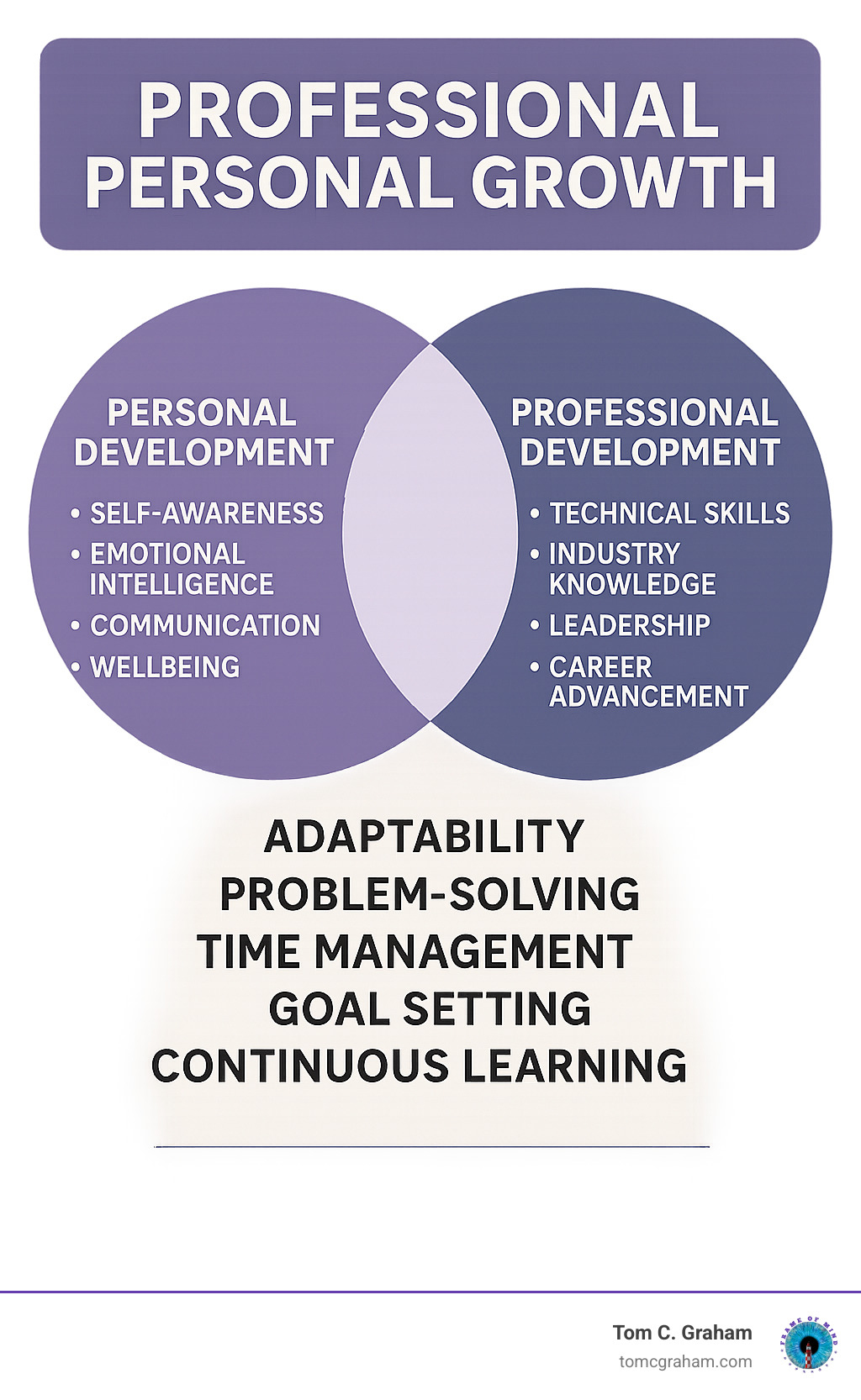
Professional personal growth happens at the intersection of who you are and what you do. It recognizes that the skills making you effective at work—like communication, problem-solving, and adaptability—are the same ones that help you thrive in your personal life.
“Personal development is the foundation for professional growth, forming core success habits and signaling to employers your openness to learning and innovation,” notes one industry expert. This connection is increasingly recognized by organizations, with high-performing HR teams being 91% more likely to meet engagement and performance goals when they prioritize personal development initiatives.
In today’s rapidly changing workplace, the need for continuous growth has never been greater. Research shows 77% of HR leaders and 68% of managers cite skills gaps as major barriers to internal promotions, while 73% of employees are experiencing change fatigue. The self-help industry has grown to a $10 billion market in response to these challenges.
This handbook will guide you through creating an effective professional personal growth plan that addresses both career advancement and personal fulfillment—because the two are inseparable components of long-term success.
Why This Handbook Matters
When change is constant and skills quickly become outdated, professional personal growth isn’t just nice to have—it’s essential for survival and success. This handbook matters because:
-
Employee engagement depends on growth opportunities: Workers who see clear paths for development are 3.5 times more likely to be engaged at work.
-
Retention hinges on development: Organizations that invest in personal and professional development see 34% better retention rates.
-
Future-readiness requires continuous evolution: The half-life of professional skills is now less than five years in many industries.
We’ve created this guide to help you steer the complex landscape of professional personal growth with practical, actionable strategies that work in real-world settings. Whether you’re an individual looking to advance your career or a leader seeking to develop your team, these principles will help you transform potential into performance.
Personal vs. Professional Development: Two Sides of the Same Coin

Have you ever noticed how the skills that make you shine at work often make your personal life better too? That’s no coincidence. When we talk about professional personal growth, we’re really exploring how two seemingly separate paths actually wind together like a double helix in our lives.
What Is Personal Growth?
Personal growth is that inner journey we all take toward becoming our best selves. It’s about developing the qualities that make us more effective, fulfilled human beings both at home and in the world.
Think about the last time you really understood why you reacted strongly to feedback—that’s self-awareness at work. Or when you kept your cool during a heated family discussion—you can thank your growing emotional intelligence for that win.
Personal growth also encompasses how clearly you express your thoughts and how deeply you listen to others—your communication skills that touch every relationship in your life. It’s about building confidence in your abilities and developing the resilience to bounce back when life knocks you down.
“Personal growth is the process of growing stronger, more confident, and more effective as a person and an agent of change in your own life, impacting how you see yourself, interact with others, and envision your future.”
At its heart, personal growth ensures you’re living in alignment with your deepest values—a compass that guides both life and career decisions with integrity and purpose.
What Is Professional Development
While personal growth focuses on who you are, professional development concentrates on what you do. It’s the deliberate expansion of your career-related capabilities and workplace effectiveness.
This is where you build the technical skills that make you valuable in your specific role—whether that’s mastering software, perfecting presentations, or developing specialized expertise. It’s also about deepening your industry knowledge so you understand the currents and trends shaping your field.
Professional development helps you cultivate leadership capabilities for guiding teams and projects through challenges. It sharpens your strategic thinking so you can see beyond immediate tasks to the bigger organizational picture.
The more visible aspects of professional development often include pursuing credentials and certifications that formally recognize your expertise, and developing the career advancement skills like networking and personal branding that position you for your next opportunity.
Many employers support this journey through structured training programs, education benefits, or sponsoring professional memberships—recognizing that your growth directly benefits their bottom line.
How They Interconnect in the Workplace
The magic happens at the intersection where personal and professional development meet. This sweet spot is what we call professional personal growth—a holistic approach that recognizes improvements in one area naturally improve the other.
Consider how developing better communication skills helps you not only connect more deeply with friends and family but also leads to more productive team meetings and client relationships. Or how greater emotional intelligence makes you both a more supportive partner at home and a more effective leader at work.
The resilience you build through personal challenges becomes your secret weapon when facing industry disruption or organizational change. And the self-awareness that helps you understand your own motivations enables more authentic leadership and wiser career choices.
Research confirms these powerful connections. A comprehensive study on skills gaps found that organizations integrating personal and professional development saw 34% higher employee retention, 29% greater productivity, and 21% better leadership pipeline development.
“Those who are most successful in work and in life never stop learning and working toward growth in both domains,” notes a leading development expert. This integrated approach creates a beautiful feedback loop—personal growth fuels professional success, which provides resources and confidence for further personal development.
The most fulfilled professionals understand this connection intuitively. They know that investing in one area inevitably strengthens the other, creating a more resilient career path and a more satisfying life journey. When you accept professional personal growth as a unified concept, you open up potential that fragmented approaches simply can’t match.
Crafting Your Professional Personal Growth Blueprint
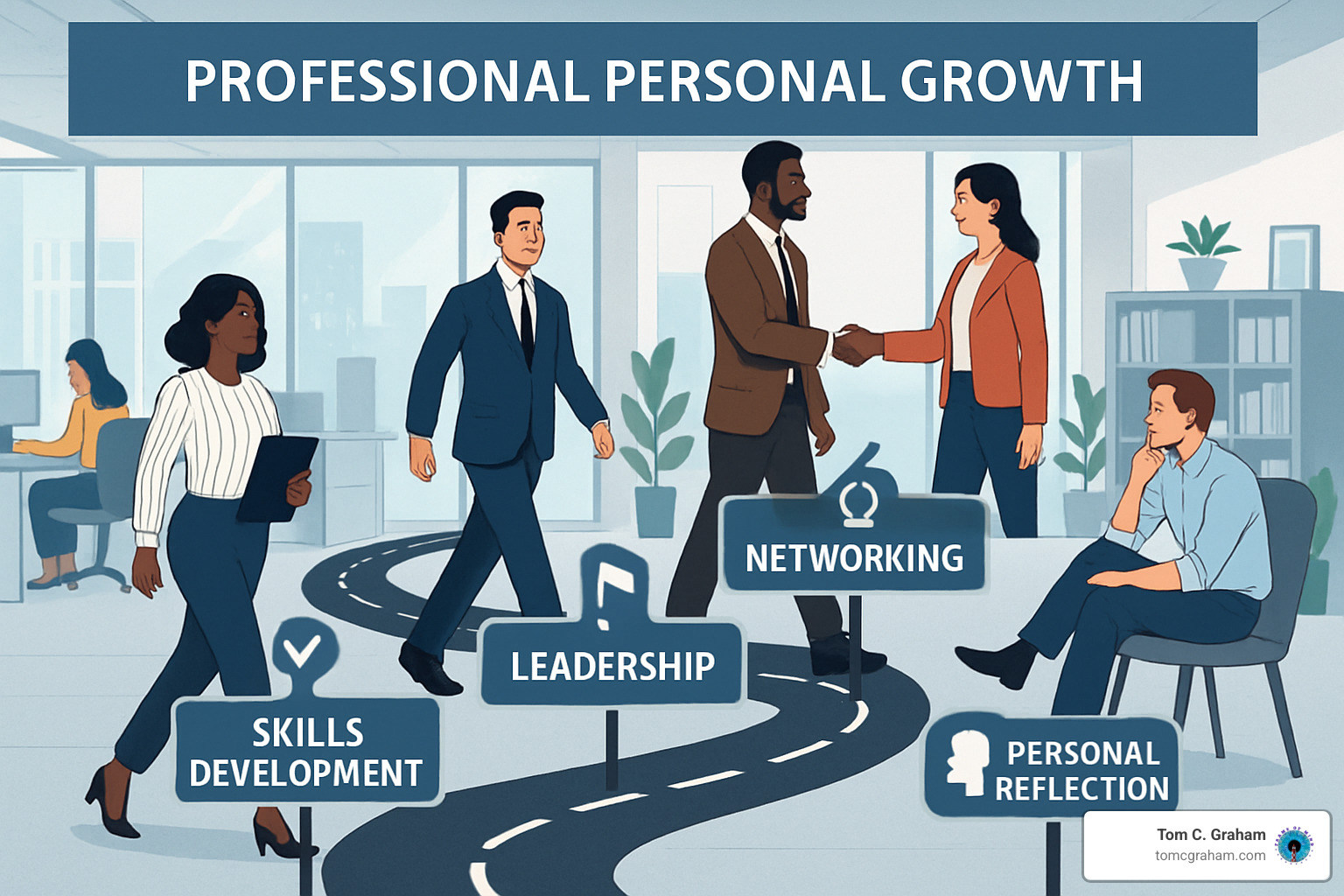
Old saying about failing to plan meaning planning to fail? When it comes to professional personal growth, that wisdom couldn’t be more relevant. Creating your growth blueprint isn’t just helpful—it’s essential for turning good intentions into real change.
Steps to Design a Professional Personal Growth Plan
Think of your growth plan as a road trip map. You need to know your starting point, destination, and the best route to get there. Here’s how to chart your course in five practical steps:
First, get crystal clear about what success looks like for you. Define your desired results and understand your motivation. This isn’t just about listing goals—it’s about connecting with why these outcomes matter to you personally. Are you seeking more confidence in leadership roles? Looking to master a technical skill that opens new career paths? When challenges inevitably arise (and they will), your “why” becomes the fuel that keeps you moving forward.
Next, take inventory of the skills you’ll need on this journey. What abilities will bridge the gap between where you are and where you want to be? Some might be technical skills specific to your profession, while others might be those universally valuable human skills like communication or emotional intelligence. Be honest about what you already have in your toolkit and what you need to acquire or sharpen.
The third step requires a healthy dose of self-awareness. Perform a skills self-assessment to understand your current proficiency levels. Rate yourself honestly—this isn’t the time for modesty or inflation. Better yet, seek outside perspectives from colleagues or mentors who can offer more objective insights. Their feedback often reveals blind spots we miss in our self-evaluation.
Now comes a crucial decision point: choose just one skill to focus on first. I know it’s tempting to tackle everything at once, but research consistently shows that focused effort yields faster progress. Select a skill that offers high impact, builds on existing strengths, and—importantly—energizes you when you think about improving it. Motivation matters!
Finally, develop your action plan using SMART goals. Rather than a vague “get better at public speaking,” try something specific like: “Deliver three 5-minute presentations to my team by June 30, incorporating feedback after each to improve clarity and confidence.” This clarity transforms wishful thinking into actionable steps.
Your plan should balance three types of development activities:
| Development Type | Description | Best Use Cases | Examples |
|---|---|---|---|
| Formal Development | Structured learning through courses, workshops, or programs | Technical skills, certification requirements, foundational knowledge | Online courses, degree programs, workshops, conferences |
| Social Development | Learning through interaction with others | Communication skills, leadership, emotional intelligence | Mentoring, networking events, mastermind groups, team projects |
| Experiential Development | Learning by doing | Practical application, confidence building, skill refinement | Stretch assignments, volunteer roles, side projects, simulations |
This balanced approach engages your head through knowledge acquisition, your heart through meaningful connection, and your hands through practical application. It’s this integration that transforms information into change.
Integrating the 7 P’s for Balance
True professional personal growth isn’t just about becoming better at your job—it’s about becoming better, period. That’s why at Tom C. Graham, we approach development through our holistic 7 P’s framework:
When you align your growth with Purpose, you tap into deeper motivation and meaning. Setting clear Priorities ensures you focus your limited time and energy on what matters most. Maintaining Peace throughout your development journey prevents burnout and sustains momentum. Improving Performance brings tangible results that boost confidence and credibility. Nurturing relationships with People creates support systems that improve learning. Addressing Personal needs ensures your development feels authentic and fulfilling. And focusing on Professional advancement connects your growth to career opportunities.
This balanced approach prevents the common pitfall of improving in one area while neglecting others. Learn more about the 7 P’s framework to see how these elements work together to create sustainable growth.
Tracking Professional Personal Growth Metrics
The simple truth is that what gets measured gets improved. Creating accountability through tracking helps turn aspirations into achievements.
Your tracking system doesn’t need to be complicated. Quantitative metrics might include completion of learning activities, practice frequency, or performance indicators relevant to your field. Equally important are qualitative measures like confidence levels, work sample quality, or reflective journal entries that capture your evolving thoughts and insights.
Digital tools like Trello or Notion can help organize your tracking, but don’t underestimate the power of good old-fashioned journaling. The act of regularly reflecting on your progress often reveals patterns and insights you might otherwise miss.
Growth rarely follows a straight line. You’ll likely experience bursts of progress, frustrating plateaus, and occasional setbacks. This is completely normal! Regular tracking helps you recognize these patterns, celebrate wins (even small ones), and adjust your approach when needed.
The beauty of a well-crafted professional personal growth blueprint is that it transforms development from a vague aspiration into a concrete journey with clear milestones. With your map in hand, you’re ready to steer the exciting path ahead. For more personalized guidance on creating your growth plan, explore our services designed to support your unique journey.
Essential Skill Areas & Daily Habits for Professional Personal Growth

Ever notice how the most successful people you know seem to have certain qualities in common? That’s no accident. True professional personal growth happens when we deliberately cultivate specific skills and establish daily habits that build upon each other over time.
Human-First Skills Employees Value Most
In today’s increasingly automated workplace, what makes us uniquely human has never been more valuable. While technical abilities remain important, research reveals an interesting shift: workers consistently prioritize human-centered skills above technical ones.
A recent workplace survey showed that teamwork (65%), communication (61%), and leadership (56%) all ranked higher than technical skills like AI and data analysis (54%). This isn’t surprising when you think about it – as machines handle more technical tasks, our ability to connect, collaborate, and create becomes our greatest asset.
“Technical skills get you hired, but human skills get you promoted,” as one development expert puts it. And Deloitte’s research backs this up – companies that prioritize human skills development report 30% higher levels of innovation and adaptability.
Communication sits at the heart of professional success. This isn’t just about speaking clearly – it’s about listening deeply, expressing ideas persuasively, and adapting your style to different audiences. When you improve how you communicate, nearly every aspect of your work life improves with it.
Emotional intelligence might sound like a buzzword, but its impact is very real. Understanding your own emotions and reading those of others helps you steer workplace relationships with grace. It’s what helps you stay calm during a crisis, respond thoughtfully to criticism, and build genuine connections with colleagues.
Being adaptable means getting comfortable with discomfort. When change is constant, your ability to pivot, learn quickly, and maintain optimism through uncertainty becomes invaluable. The most resilient professionals don’t fear change – they anticipate it.
Critical thinking cuts through noise and complexity. When you can analyze problems from multiple angles, evaluate evidence objectively, and make sound decisions, you become an indispensable asset to any team. This skill helps you avoid costly mistakes and identify opportunities others might miss.
True collaboration goes beyond simply working together. It’s about leveraging diverse perspectives, resolving conflicts constructively, and building partnerships across different functions. The magic happens when you can turn a group of individuals into a cohesive team greater than the sum of its parts.
Habits That Compound Over Time
The beauty of professional personal growth lies not in dramatic changes but in the power of small, consistent actions that compound over time – what author James Clear calls “the aggregation of marginal gains.”
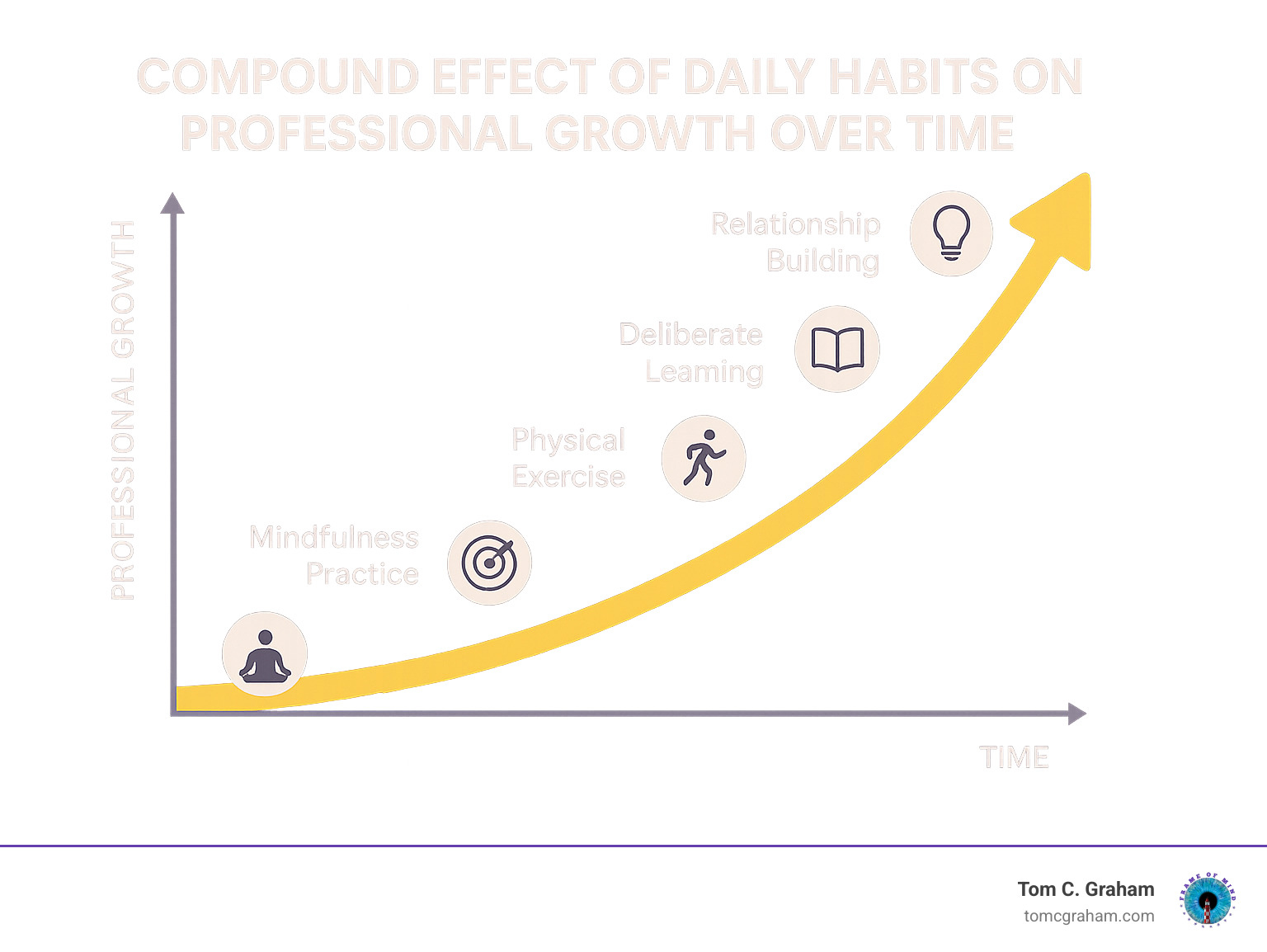
Daily reflection might feel insignificant in the moment, but those 5-10 minutes create profound awareness over time. Try bookending your day with brief reflection periods. In the morning, set intentions; in the evening, review what went well, what didn’t, and what you learned. This simple practice helps you recognize patterns and make continuous adjustments.
Mindfulness practice does more than reduce stress – it literally reshapes your brain. Research from the American Psychological Association shows that regular mindfulness improves working memory, cognitive flexibility, and focus. Even 5 minutes daily makes a difference in how clearly you think and how effectively you respond to challenges.
“It’s better to meditate for five minutes daily than for an hour once a week,” notes one mindfulness expert. Consistency trumps intensity when building any habit.
Physical exercise might seem disconnected from professional growth, but the mind-body connection is powerful. A brisk 20-minute walk can boost creativity, improve mood, and improve problem-solving abilities. The discipline required for regular exercise also strengthens your willpower muscle for other areas of life.
Deliberate learning doesn’t require hours of study. Dedicating just 15-30 minutes daily to reading industry articles, listening to relevant podcasts, or taking micro-courses creates remarkable knowledge growth over time. The key is making this learning intentional rather than passive.
Relationship building happens one conversation at a time. Reaching out to one colleague daily, offering help without expectation, or scheduling regular check-ins with mentors creates a powerful network that supports your growth. These small investments in others often yield the highest returns in your professional journey.
Skill practice follows the principle that improvement comes from deliberate, focused effort. Spending even 15 minutes daily on your target skill – whether that’s public speaking, coding, or creative writing – creates momentum that builds confidence and competence.
The secret to making these habits stick? Start small, build gradually, and connect new habits to existing routines. When you attach a new behavior to something you already do automatically (like drinking water right after brushing your teeth), you remove the friction that often derails good intentions.
Professional personal growth isn’t about perfection – it’s about progress. Each small step forward compounds over time, creating a future professional who’s more capable, confident, and fulfilled than you can imagine today.
Removing Roadblocks and Building a Support Network

Let’s face it – even with the best intentions, our growth journeys rarely follow a straight path. The road to professional personal growth is often dotted with obstacles that can slow us down or even bring us to a complete standstill. But here’s the good news: these roadblocks aren’t permanent barriers – they’re just challenges waiting to be overcome.
Common Barriers & How to Overcome Them
Time constraints might be the most universal challenge we all face. When your calendar is already packed with meetings and deadlines, finding space for development can feel impossible. Instead of trying to carve out huge blocks of time, consider using time blocking for smaller, non-negotiable growth moments. Even 15 minutes of focused learning can make a difference when applied consistently. Look for those “edge times” during commutes or waiting periods where you could listen to an industry podcast or review flashcards for a new skill.
Change fatigue has become increasingly common in our rapidly evolving world. When you’re already processing significant changes at work or home, the thought of intentional growth can feel overwhelming. Be gentle with yourself here. Start with tiny wins that create momentum rather than massive overhauls. Integrating small growth activities into existing routines creates less friction than adding entirely new behaviors.
Many of us struggle with unclear direction – not knowing which skills deserve our limited attention. This uncertainty can lead to paralysis or scattered efforts across too many development areas. A personal SWOT analysis (Strengths, Weaknesses, Opportunities, Threats) can provide clarity, as can direct feedback from trusted colleagues. Look to your role models – what skills have made them successful that you might develop?
Perhaps the most insidious barrier is fear and imposter syndrome. That voice in your head questioning whether you belong or have what it takes can sabotage growth before it begins. Try reframing your development as experimentation rather than performance. When we approach growth with a “beginner’s mind,” we give ourselves permission to learn through mistakes and awkward first attempts. Everyone you admire once stood exactly where you are now.
Without accountability, even the most motivated among us can lose momentum. Our intentions drift when no one is watching. Finding an accountability partner for regular check-ins can provide the external structure needed to maintain progress. Consider joining or creating a mastermind group where members share goals and hold each other responsible for progress. Sometimes, making public commitments creates just enough positive pressure to keep us moving forward.
Leveraging Feedback, Mentorship & Networking
No one grows in isolation. The quality of your support network often determines the speed and depth of your professional personal growth. Research consistently shows the power of mentorship, with 97% of mentees reporting valuable experiences and 55% directly attributing their success to mentor relationships.
When seeking feedback, be specific rather than general. Instead of asking “How am I doing?” try “What one thing could I improve about my client presentations?” Create regular, informal channels where colleagues feel safe providing honest input. The most powerful part of feedback isn’t receiving it, but showing you’ve implemented it – close the loop by following up with those who offered suggestions.
Mentorship comes in many forms, each with unique benefits. Formal mentorship through organizational programs provides structured guidance with clear expectations. Informal mentorship develops naturally through connections with people whose perspective you value. Don’t overlook the power of reverse mentorship, where you learn from those with different experiences – perhaps younger colleagues with digital native skills or team members from different cultural backgrounds.
Peer coaching creates mutual support systems with colleagues at similar career stages. These relationships often feel safer because of the shared experiences and equal power dynamic, making them ideal for working through current challenges together.
Your professional network extends your reach and opportunities exponentially. Industry associations like the Society for Human Resource Management (SHRM) or American Marketing Association (AMA) provide structured networking along with resources. Online communities offer convenient connection points, while local meetups and events create deeper in-person relationships. Don’t forget to cultivate your internal network through cross-functional projects and employee resource groups.
For ongoing insights about building these supportive relationships, our Frame of Mind blog regularly addresses these topics with practical strategies you can implement immediately.
Organizational Responsibility: Creating a Growth Culture
While personal effort drives individual growth, organizations create the environment where development either thrives or withers. The data is compelling – high-performing HR teams are 91% more likely to meet engagement and performance goals when they prioritize personal development initiatives. Yet research from Gartner reveals a concerning gap: 70% of HR leaders believe their current leadership programs aren’t preparing managers for future challenges.
Forward-thinking organizations embed learning directly into daily work through just-in-time coaching during projects and reflective practices in team meetings. They create psychological safety where mistakes become learning opportunities rather than reasons for shame. When leaders model vulnerability by sharing their own growth journeys, it gives everyone permission to be learners.
Structured development resources – whether learning stipends, protected time for development, or clear career pathways – signal organizational commitment to growth. Regular, informal feedback conversations create environments rich in development opportunities, while recognition programs that highlight growth efforts (not just outcomes) reinforce the desired culture.
Perhaps most importantly, organizations that support professional personal growth recognize the interconnection between work and life. Flexible schedules that accommodate learning activities, wellness programs that improve capacity for growth, and family-friendly policies that reduce stress all contribute to sustainable development.
As one client recently shared with me, “The most powerful thing my company did was when our CEO talked openly about his own struggles with public speaking and the coaching he sought to improve. Suddenly, development wasn’t just for underperformers – it was for everyone, including our most successful leaders.”
Frequently Asked Questions about Professional Personal Growth
How can I measure progress without formal performance reviews?
When your company doesn’t offer regular performance reviews, tracking your professional personal growth becomes a self-directed trip. Think of it as becoming your own growth coach!
Start by creating personal feedback loops that give you honest insights. Many of my clients find that simple self-assessment tools work wonders—try rating your skills on a 1-10 scale at regular intervals, or keep a growth journal with specific prompts like “What did I learn today?” and “How did I apply my focus skill?”
Recording yourself (yes, I know it can feel awkward!) during presentations or meetings can reveal patterns you’d never notice otherwise. One client finded her habit of apologizing before sharing ideas simply by watching herself on video.
Don’t underestimate the power of peer feedback, either. Ask trusted colleagues for “Start-Stop-Continue” input over coffee—what should you start doing, stop doing, and continue doing to improve? These conversations often yield more actionable insights than formal reviews ever could.
The secret to measuring growth is consistency. Whether you check in weekly, monthly, or quarterly, establish regular checkpoints to assess your progress and adjust your approach. Your future self will thank you!
What if my company doesn’t invest in development programs?
When your workplace doesn’t prioritize development, it’s easy to feel stuck—but limited company resources don’t have to limit your growth. You’re in charge of your development journey!
Consider creating your own growth budget. Even setting aside a small percentage of your income for learning can yield impressive returns. Many of my clients are surprised by how many free or low-cost resources exist—from library books to MOOCs (Massive Open Online Courses) to YouTube tutorials. One client completely transformed her presentation skills using only free resources and deliberate practice.
Building your external support network becomes even more crucial when internal support is lacking. Professional associations in your field often provide tremendous value through conferences, webinars, and networking opportunities. Online communities and mastermind groups can provide both accountability and fresh perspectives on your challenges.
Don’t overlook the growth potential right in your current role. Volunteer for challenging projects that stretch your capabilities. One client volunteered to lead a cross-functional team even though it terrified her—six months later, she’d developed leadership skills that positioned her for promotion.
While company support is helpful, ownership of your development ultimately rests with you, not your employer. The most successful professionals I’ve worked with take full responsibility for their growth, regardless of organizational support.
Which personal goals translate fastest into career advancement?
While all aspects of professional personal growth create value, certain personal development areas tend to deliver quicker professional returns—think of them as high-ROI investments in your career portfolio.
Communication skills often yield the most immediate visibility. Clear writing, confident speaking, and especially active listening can transform your workplace reputation almost overnight. I’ve seen professionals go from overlooked to indispensable simply by becoming the person who truly listens and asks thoughtful questions in meetings.
Emotional intelligence follows closely behind. Your ability to steer conflicts, stay composed under pressure, and demonstrate empathy creates ripple effects throughout your professional relationships. One client who focused on improving her self-regulation during stressful situations found herself being considered for leadership roles within months.
Mastering productivity systems also delivers quick returns. When you consistently manage your time well, set clear priorities, and maintain focus despite distractions, people notice. These skills signal leadership potential because they demonstrate you can handle increasing responsibility.
Strategic networking—both within and outside your organization—opens doors that skills alone cannot. One client made it a goal to have coffee with someone from a different department each week. Within six months, he’d built relationships that led to a cross-functional role that had never existed before.
Finally, demonstrating a growth mindset through behaviors like seeking feedback, volunteering for challenges, and bouncing back from setbacks shows everyone around you that you’re advancement material.
While focusing on these quick-win areas, don’t neglect longer-term technical and leadership development. The most sustainable career growth comes from balancing immediate visibility with deeper capability building—just like the balance we emphasize in our 7 P’s framework.
Conclusion
The journey of professional personal growth is never truly complete—it’s an ongoing trip that unfolds throughout your career and life. As we’ve explored in this handbook, the most powerful growth happens when personal development and professional advancement come together like old friends.
Think of all we’ve covered together: creating your structured growth plan, building those small daily habits that compound over time, pushing past the inevitable roadblocks, and surrounding yourself with people who lift you higher. When you bring these elements together, you’re setting yourself up not just for quick wins but for lasting change.
What makes this integrated approach so powerful is how it ripples through every aspect of your life:
Your career path naturally opens up as you develop the unique blend of human and technical skills that make you irreplaceable. That Monday morning feeling transforms as your work aligns more closely with what truly matters to you. The culture around you shifts as your growth mindset inspires others to pursue their own development. And perhaps most importantly, that elusive work-life balance becomes more attainable as you grow in balanced, intentional ways.
At Tom C. Graham, we’ve seen the 7 P’s framework guide countless individuals through this journey, ensuring that growth improves both performance and peace. Find how this framework can revolutionize your approach to professional personal growth and help you steer the complexities of modern work life.
Your most significant growth often emerges from your biggest challenges. As James Clear wisely notes, “Every action you take is a vote for the type of person you wish to become.” Each seemingly small step on your growth journey compounds over time, changing not just your capabilities but your very identity.
I invite you to accept your journey of professional personal growth today. The investment you make in yourself will yield returns far beyond what you can currently imagine—in your work, your relationships, and your sense of purpose and fulfillment.
So let me ask you: What one small step will you take today?