
Elevating Your Success: The Power of a Life Coach for Business Professionals
A life coach for business professionals is a specialized coach who helps high-achievers steer career challenges while maintaining personal wellbeing and fulfillment. If you’re seeking guidance on professional growth with life balance, here’s what you need to know:
- Primary Focus: Helps business professionals align career success with personal values and wellbeing
- Key Benefits: Improved leadership skills, better work-life balance, clearer decision-making, reduced burnout
- Average Cost: $300-500 per month for regular sessions
- Typical ROI: Improved performance, greater job satisfaction, reduced stress, improved relationships
- Finding the Right Coach: Look for business experience, relevant credentials, and personal chemistry
The demand for professional coaching has skyrocketed in recent years, with the International Coaching Federation reporting a 33% increase in coach practitioners between 2015 and 2019. This growth reflects the increasing pressures facing today’s business professionals.
In a world of constant demands and competing priorities, many successful professionals find themselves asking: “Why am I not feeling fulfilled despite my achievements?” or “How can I perform at a high level without sacrificing my wellbeing?”
The truth is that professional success without personal balance often leads to burnout, strained relationships, and diminished performance over time. A life coach specializing in business professionals bridges this gap by addressing both career advancement and personal fulfillment.
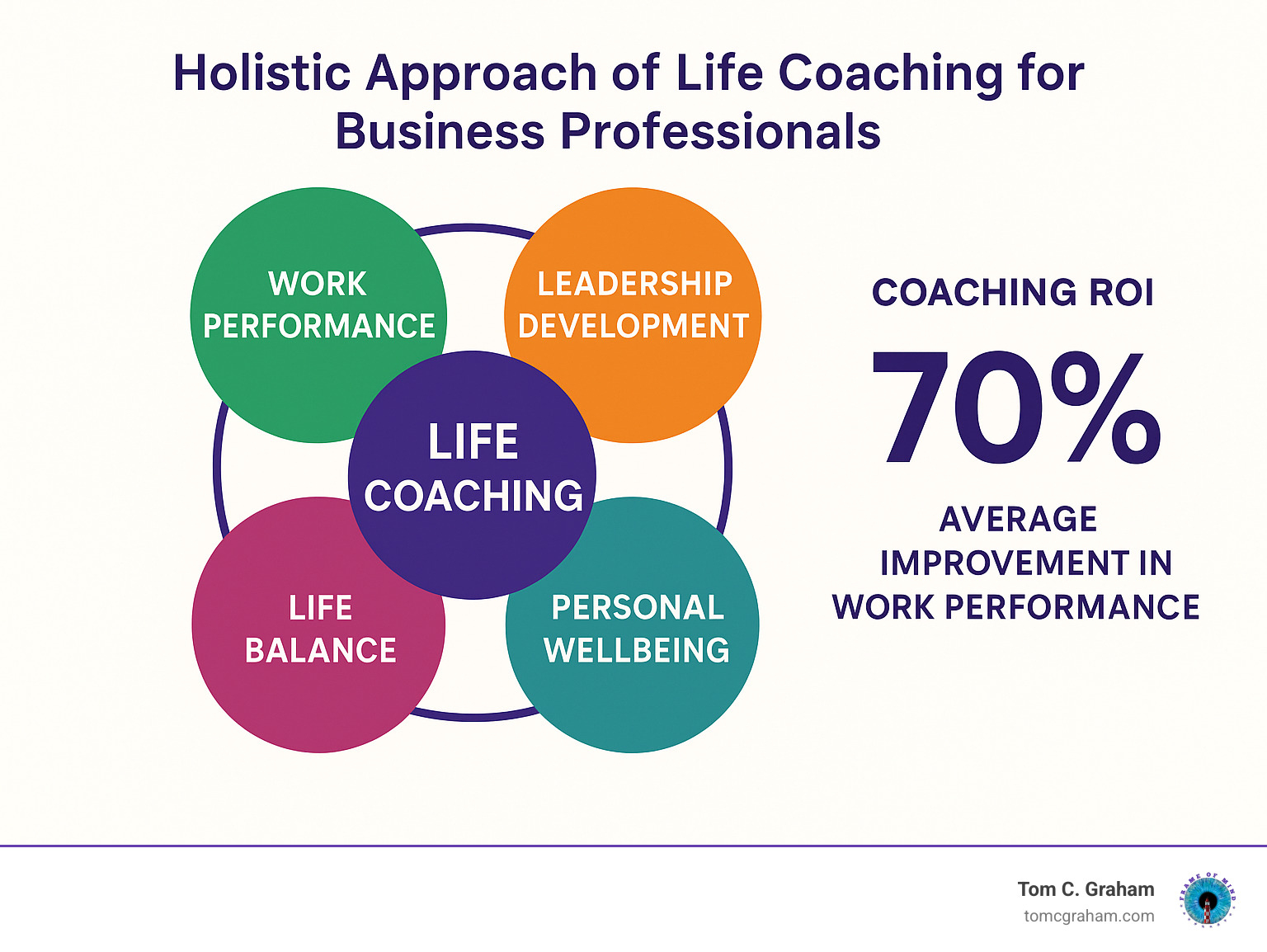
Unlike executive coaches who focus primarily on leadership skills or business coaches who concentrate on company growth, a life coach for business professionals takes a holistic approach. They help you integrate professional ambitions with personal values, health, and relationships.
As one client shared after working with a coach: “I was able to 8× my net worth while actually enjoying my work and taking over 190 days off per year.” While results vary, the right coach can help you achieve both success and satisfaction.
What Does a Life Coach for Business Professionals Do?
Have you ever wondered what exactly happens when you work with a coach? According to the International Coaching Federation (ICF), coaching is a “partnering with clients in a thought-provoking and creative process that inspires them to maximize their personal and professional potential.” When focused specifically on business professionals, this partnership becomes a powerful tool for achieving excellence across all areas of life.
A life coach for business professionals works at that critical intersection where career success meets personal fulfillment. They don’t just help you climb the corporate ladder faster—they ensure you’re climbing the right ladder, in a sustainable way, while maintaining everything else that matters to you.
How a life coach for business professionals differs from other coaches
The coaching landscape can be confusing with various titles and specialties. Here’s how different support roles compare:
| Type of Coach | Primary Focus | Typical Outcomes |
|---|---|---|
| Life Coach for Business Professionals | Whole-person development with career integration | Balanced success, aligned values, sustainable performance |
| Executive Coach | Leadership skills and organizational impact | Improved management abilities, strategic thinking |
| Business Coach | Company growth and operational excellence | Better business metrics, optimized processes |
| Career Coach | Job advancement and professional skills | New positions, promotions, skill development |
| Therapist | Mental health and past trauma resolution | Healing, emotional regulation, self-understanding |
| Consultant | Expert advice on specific business problems | Solutions to particular challenges, implementation plans |
| Mentor | Guidance based on personal experience | Industry-specific knowledge, networking |
What makes a life coach for business professionals truly special is their holistic perspective. They understand that your Monday morning performance review anxiety, your Wednesday afternoon energy crash, and your weekend family tensions are all connected parts of the same life—yours. Rather than treating your career as something separate from “real life,” they help you weave everything together into a meaningful whole.
This integrated approach is at the heart of Tom Graham’s 7 P’s framework, which recognizes that lasting success comes from balancing multiple dimensions rather than sacrificing everything for professional advancement.
Core challenges a life coach addresses
Today’s business professionals face unique pressures that a specialized coach is perfectly positioned to help with:
Burnout and energy management affects nearly every high-achiever at some point. That constant feeling of being drained isn’t just unpleasant—it actually compromises your decision-making and creativity. A coach helps you establish sustainable rhythms that protect your most valuable resource: your energy.
Imposter syndrome doesn’t disappear with success—sometimes it gets worse! Even after multiple promotions or achievements, many professionals still hear that inner voice saying they don’t belong. Coaches help you recognize your authentic strengths and contributions without needing constant external validation.
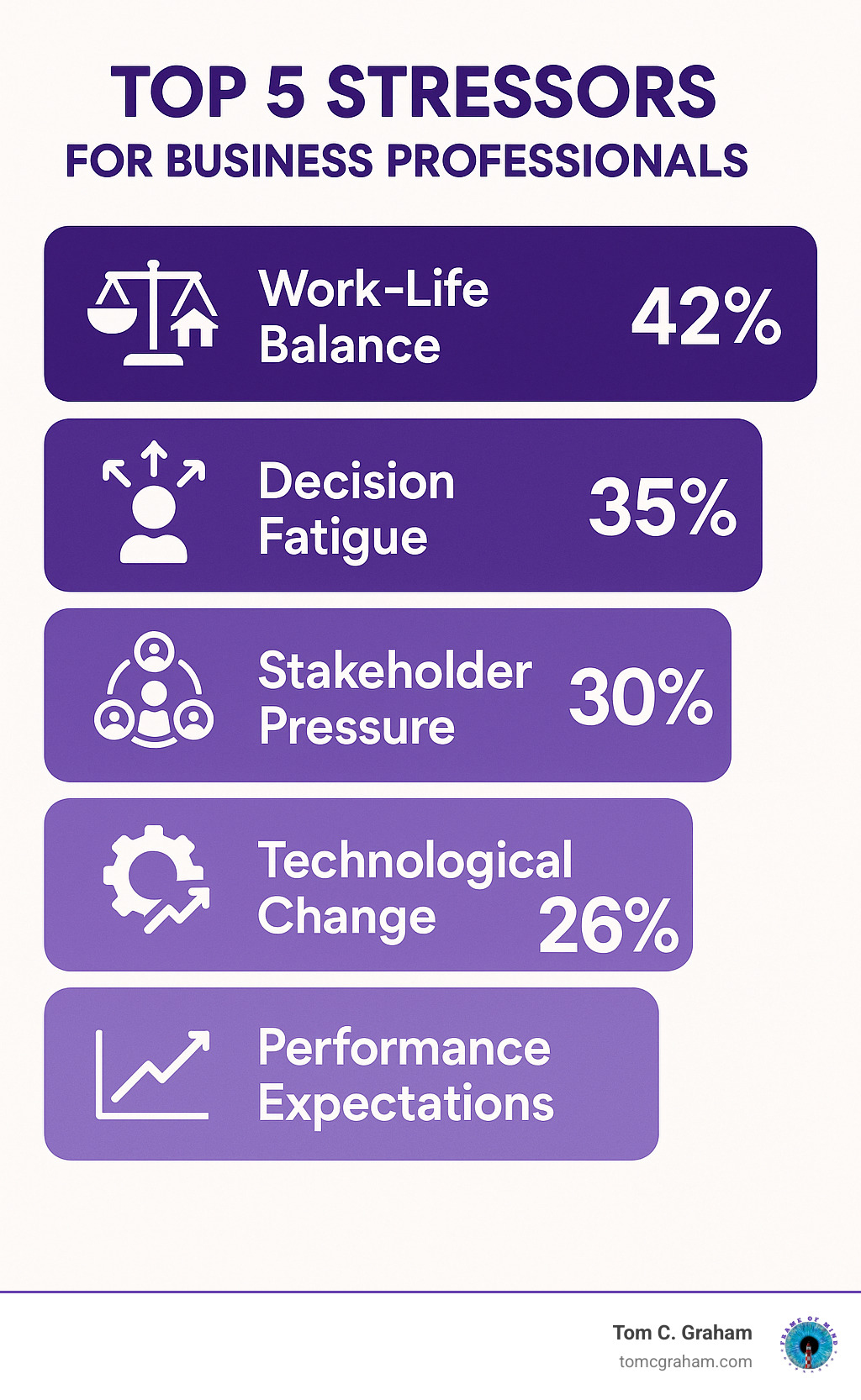
Decision fatigue is real. The average business leader makes hundreds of decisions daily, which literally depletes your brain’s glucose levels. Your coach helps you create frameworks that simplify decisions and preserve mental resources for what truly matters.
Values misalignment occurs when your daily work conflicts with what you truly care about. This disconnect creates a persistent sense of dissatisfaction that no promotion or bonus can fix. Coaches help you identify your core values and align your career choices accordingly.
Challenges Business Professionals Face & How Coaching Helps

Let’s face it – the modern business world can feel like running on a treadmill that keeps speeding up.
Today’s professionals aren’t just dealing with heavy workloads; they’re navigating an entirely new landscape of challenges. The constant ping of notifications has erased the boundaries between work and home. That project deadline follows you to your child’s soccer game. Your inbox fills up while you’re trying to sleep.
Time pressure has become relentless. With smartphones keeping us perpetually connected, many professionals feel like they’re never truly “off the clock.” This always-on mentality leads to what many of my clients describe as a nagging sense of guilt – either about work when they’re with family, or about family when they’re working late.
This naturally creates serious work-life imbalance. When I talk with new clients, I often hear a version of: “I’m successful on paper, but I haven’t seen my kids awake in three days.” Professional achievement that comes at the cost of personal wellbeing isn’t sustainable success – it’s a recipe for burnout.
Add to this the rapid change that defines today’s business environment. The skills that made you valuable five years ago might be automated tomorrow. Markets transform overnight. Staying relevant requires constant adaptation and learning.
The science behind stress and performance
Your body doesn’t know the difference between a looming deadline and a charging predator – it responds with the same stress hormones either way. The science here is clear and concerning.
When cortisol (your primary stress hormone) stays liftd for weeks or months, it doesn’t just make you feel awful – it literally changes how your brain works. Your prefrontal cortex – the decision-making center – shows reduced activity. Your amygdala – the emotional alarm system – becomes more sensitive.
This biological reality explains why chronic stress leads to poorer decisions, foggy thinking, and emotional reactivity – precisely when you need your best thinking. Research from the International Coaching Federation confirms that sustained pressure without relief also diminishes creativity, weakens your immune system, and increases your risk for serious health problems.
A life coach for business professionals helps you recognize these patterns before they derail your career and health. We’re not aiming to eliminate all stress (some pressure actually improves performance), but rather to create rhythms that allow for recovery and sustainable excellence.
Tools your coach may use
Working with a coach isn’t about following generic productivity tips. It’s about creating personalized strategies that work with your unique strengths, challenges, and circumstances.
Tom Graham’s 7 P’s framework offers a comprehensive approach that addresses both performance and wellbeing. This isn’t about quick fixes – it’s about sustainable change:
When we work on your Purpose, we’re clarifying what truly matters to you beyond external expectations. This becomes your compass when facing difficult choices.
Shifting your Perspective helps you see situations differently, often changing seemingly impossible challenges into navigable paths forward.
Defining clear Priorities prevents the urgent from constantly overtaking the important in both your professional and personal life.
Proven Benefits & Measuring ROI of Coaching
Working with a life coach for business professionals delivers benefits that reach far beyond just climbing the career ladder. The change often touches every aspect of your professional and personal life.
Think about what matters most to you as a professional. Perhaps it’s becoming a more adaptable leader who can flex your style based on what each team member needs. Maybe it’s gaining that crystal-clear focus that helps you zero in on truly impactful work. Or it could be rekindling that spark of passion for your career that might have dimmed over time.
These are precisely the areas where coaching creates meaningful change. Professionals who invest in coaching frequently report significant improvements in their leadership agility, strategic clarity, and workplace engagement. Many find themselves advancing more quickly in their careers or choosing to stay longer in roles they’ve learned to reshape and enjoy.
But the impact doesn’t stop at the office door. The ripple effects often extend to more fulfilling personal relationships, improved health markers, and a deeper sense of satisfaction with life as a whole.
Quantifying success with a life coach for business professionals
“How do I know if coaching is actually working?” It’s a fair question, and one that deserves a thoughtful answer.
The truth is that measuring the return on your coaching investment involves both numbers and nuance. Many coaches begin with standardized assessments to establish your baseline, then revisit these same measures months later to track your growth. The 360-degree feedback approach brings in perspectives from colleagues, team members, and supervisors to provide a more complete picture of your evolution.
Setting clear, measurable objectives at the start of your coaching journey creates natural checkpoints for evaluating progress. Whether you’re tracking changes in your stress levels through wellbeing surveys, monitoring financial metrics relevant to your role, or analyzing how differently you allocate your time, these tangible indicators help confirm the value of your coaching investment.
The financial data speaks volumes about what professionals are willing to invest for meaningful results. According to ICF research, coaching practitioners in North America earn an average annual revenue of $62,500. Executive coaches with extensive experience can command fees around $160,000 annually—a clear indicator of the premium value placed on their expertise by top professionals seeking transformative results.
Case study snapshots
While your coaching journey will be uniquely yours, these real-world examples illustrate what’s possible:
Mark, an entrepreneur who worked with a coach, shares: “I was able to 8× my net worth while actually enjoying the work I do.” For Dr. Christopher, coaching led to an extraordinary lifestyle shift: “I now take more than 190 days off per year while maintaining a thriving practice and growing my income.”
Business owner Pamela found that coaching helped her “double my business using a new toolkit of strategies while reducing my stress levels.” Manager Sunny found deeper alignment: “I became a better husband and developed a healthier team culture by aligning my leadership with my core values.”
The Coaching Process, Credentials & Selecting the Right Fit
Working with a life coach for business professionals typically follows a rhythm that balances structure with personalization. Think of it as a journey with clear milestones, yet flexible enough to adapt to your unique needs.
Most coaching relationships begin with what coaches call a “findy” or “chemistry” session. This initial conversation helps establish rapport and determine if you and the coach are a good match. It’s like a first date for your professional development—a chance to see if there’s chemistry and shared vision.
After this initial meeting, the process usually unfolds through regular sessions—typically every two to four weeks, lasting 60-90 minutes each. Between these core conversations, many coaches offer brief check-ins to maintain momentum and accountability. Some even provide email or text support when you face unexpected challenges or opportunities.

Most coaching partnerships for business professionals last between six months and two years. This timeframe allows for meaningful change while maintaining focus. After achieving initial goals, some clients choose to continue with less frequent sessions—perhaps quarterly check-ins to sustain progress and address new challenges as they arise.
When it comes to credentials, the International Coaching Federation (ICF) provides the gold standard in coaching certification. Their designations—Associate Certified Coach (ACC), Professional Certified Coach (PCC), and Master Certified Coach (MCC)—reflect increasing levels of training and experience. While Tom Graham holds the Professional Certified Coach (PCC) credential, it’s worth noting that credentials tell only part of the story.
Equally important is finding someone with relevant business experience, a compatible coaching style, and genuine personal connection. The most impressively credentialed coach might not be your best match if their approach doesn’t resonate with your personality and needs.
Steps to find a life coach for business professionals
Finding the right coach is a bit like finding the right business partner—it requires clarity, research, and trusting your instincts.
Start by defining what you hope to achieve. Are you primarily focused on leadership development? Work-life integration? Career transition? Having clarity about your goals will help you find a coach with relevant expertise.
Next, explore reputable directories like Noomii that feature searchable databases of coaches with various specializations. Professional coaching organizations also maintain directories of certified coaches.
Real-World Success Stories & Organizational Applications
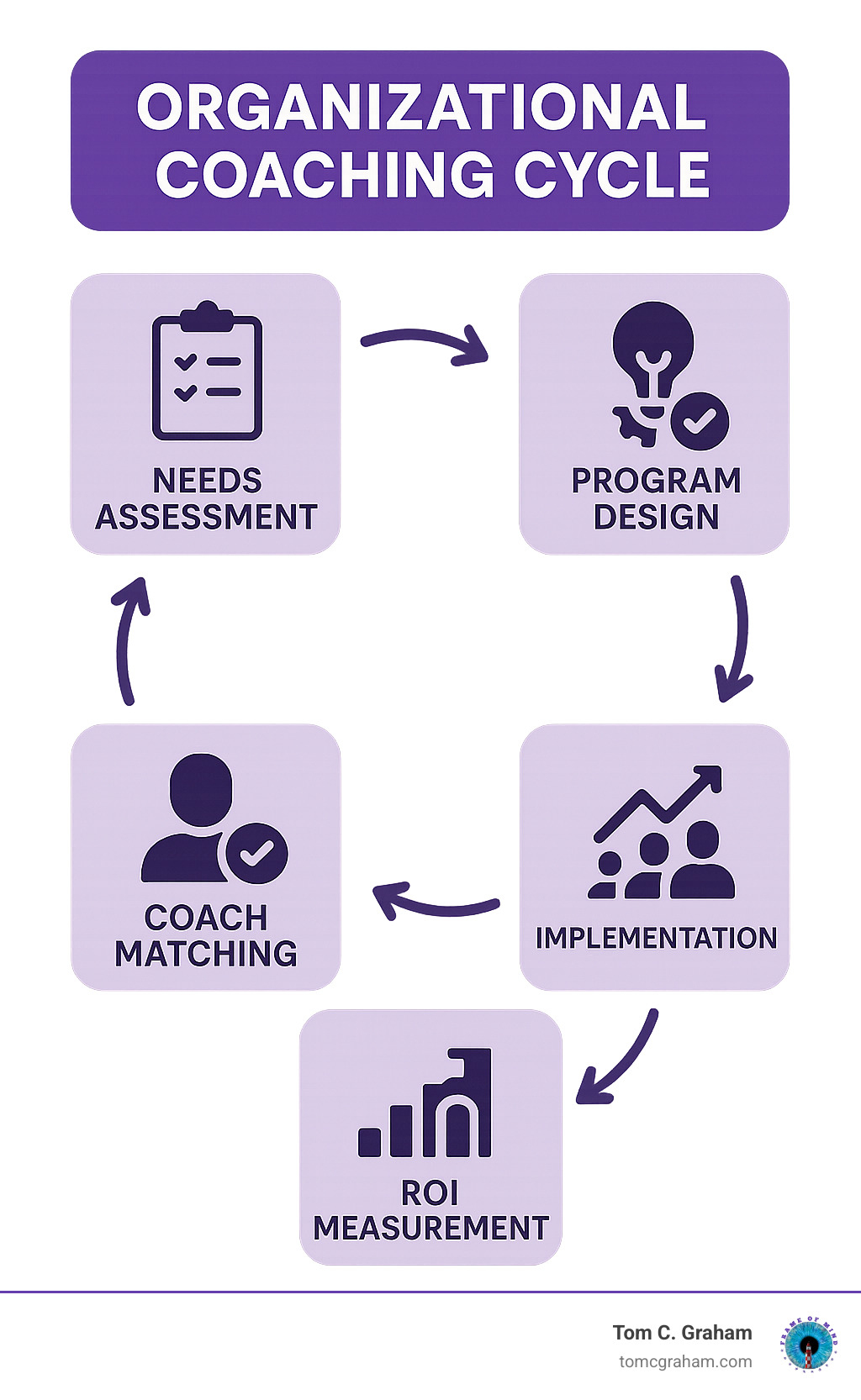
Beyond individual coaching, many organizations now incorporate coaching into their leadership development programs. This approach recognizes that developing the whole person—not just job-specific skills—leads to better leadership outcomes and organizational performance.

When I talk with clients about bringing coaching into their organizations, they’re often surprised by the variety of approaches available. Enterprise coaching programs typically take several forms, each serving different needs within the company.
Some organizations implement leadership cohorts where groups of leaders at similar levels receive both group and individual coaching. This creates a powerful combination of personalized development and peer learning. Others focus on transition support, providing new leaders with coaching during their first 6-12 months in a role—often the most challenging period in any leadership journey.
Many forward-thinking companies invest in high-potential development, offering coaching as part of acceleration programs for promising future leaders. This helps prepare the next generation of executives while reducing flight risk. At the highest levels, executive team alignment brings coaching to leadership teams collectively, improving dynamics and strategic cohesion.
Bringing coaching to your team
If you’re considering introducing a life coach for business professionals to your organization, starting small is often the wisest approach. Begin with a pilot program for a specific group before scaling. This allows you to refine the process and demonstrate value before a broader rollout.
Securing leadership buy-in is absolutely essential. When executives understand and visibly support the coaching initiative, participation and engagement dramatically increase. Be prepared to explain both the tangible and intangible benefits in language that resonates with decision-makers.
Clear objectives make all the difference. Work with your coach to establish what success looks like for both individuals and the organization. This might include improved employee engagement scores, reduced turnover, or specific performance metrics relevant to your business.
Selecting coaches carefully can make or break your program. Look for coaches with relevant industry experience and organizational understanding. A life coach for business professionals with experience in your sector will understand the unique pressures and opportunities your team faces.
Frequently Asked Questions about Life Coaching for Business Professionals
What should I expect in my first coaching session?
The first time you meet with a life coach for business professionals feels a bit like a first date – you’re both figuring out if there’s chemistry while setting the foundation for what might come next.
Your coach will likely begin by getting to know you – your background, what’s currently happening in your life, and where you hope to go. They’ll share their approach to coaching and explain how they maintain confidentiality (which is crucial for creating a safe space where you can be completely honest).
Most importantly, this initial conversation centers around what you want to achieve. Are you seeking better work-life balance? Looking to advance your career while preserving your sanity? Trying to lead more effectively without burnout?
Tom’s clients often describe feeling a sense of relief after this first meeting – finally having a dedicated space to articulate challenges they’ve been carrying alone. This session typically lasts 60-90 minutes, giving you plenty of time to determine if this relationship feels right for your journey.
Is coaching worth the investment compared to training courses?
Imagine the difference between reading a cookbook and having a chef guide you through preparing a meal in your own kitchen. That’s similar to the difference between training courses and personalized coaching.
Training courses deliver valuable knowledge in a one-size-fits-many format. They’re excellent for learning specific skills or concepts. However, research shows that people typically implement only about 20% of what they learn in training alone.
In contrast, coaching offers something distinctly different: personalized guidance custom specifically to your situation, ongoing accountability that keeps you moving forward, help identifying blind spots you can’t see yourself, and a confidential space to process real-time challenges.
When training is paired with coaching, implementation rates jump dramatically to 70-80%. This happens because a life coach for business professionals helps you apply new knowledge to your specific circumstances while working through the internal barriers that often prevent change.
Conclusion
In today’s high-pressure business world, we’ve come to recognize an important truth: professional success without personal fulfillment simply isn’t sustainable. A life coach for business professionals offers a powerful partnership for those who want to excel in their careers while maintaining the balance, wellbeing, and meaning that makes life truly rich.
The evidence speaks volumes. With the International Coaching Federation reporting a 33% increase in coach practitioners and a 21% increase in coaching revenue between 2015 and 2019, more professionals than ever are finding the transformative benefits of this personalized approach to development.
At the heart of effective coaching lies a holistic framework like Tom Graham’s 7 P’s approach. This comprehensive methodology accepts Purpose, Perspective, Priorities, Planning, Performance, Peace, and Presence – recognizing that lasting success requires alignment across all dimensions of life, not just your professional performance.
If you’re feeling the pull toward working with a coach, I encourage you to take these thoughtful steps:
- Take time to define what true success means for you – in both your career and personal life
- Do your homework on potential coaches with relevant experience and credentials
- Have conversations with 2-3 coaches to feel out the right chemistry
- Start with clear objectives and a defined timeframe
- Commit wholeheartedly to the process, including the important work between sessions
Think of coaching as an investment in your most valuable asset – you. The dividends from this investment typically reach far beyond career advancement, touching your relationships, health, and overall satisfaction with life.
As one client beautifully expressed: “Working with a coach helped me realize I was climbing a ladder leaning against the wrong wall. Now I’m achieving more while actually enjoying the journey.”
The journey toward both achievement and fulfillment doesn’t have to be traveled alone. A life coach for business professionals can help you steer the complexities of modern work life while staying connected to what matters most to you. When performance and peace work together rather than against each other, that’s when true success becomes not just possible, but sustainable.
Ready to explore how coaching might transform your professional and personal life? Learn more about the 7 P’s approach and next steps at Tom C. Graham’s website.